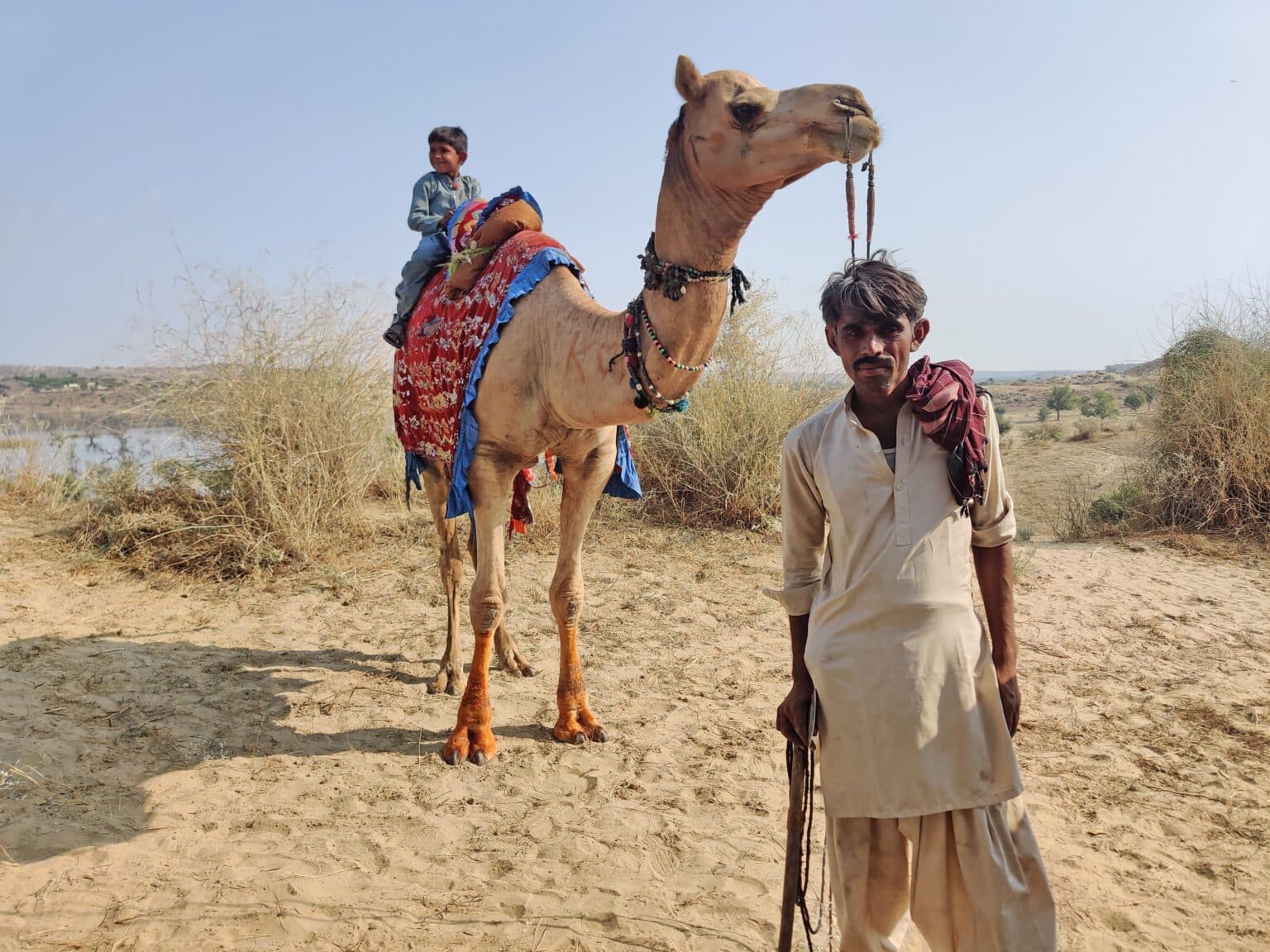
ts words floated through the air, carrying with them a deep sense of loss. They spoke of a people who lived in harmony with their desert home where the rise of the sun, the fall of the night and the dance of the moon were all part of a natural rhythm. A people whose life has been bound to their land and natural resources as far back as their racial subconscious could go.
Years later, in 2024, I found myself in Tharparkar, standing in the land that the poem mourns about. Only here I could understand why it opens with an ominous line: “Panr ta ahyo bora manrhu” (we are naïve people). The hint is unmistakable: something bad is going to happen to these naïve people. While moving through Islamkot, a sprawling taluka in the middle of Tharparkar district, I also realised why the poet mourns the loss of the delicate balance between human life and nature – because it is being un-ravelled here thread by thread by coal mining.
Once humming with all forms of life, large parts of Islamkot are now dotted with only coal mines and coal-based power plants. Its wind, once a carrier of cool desert air, now brings the stifling dust of coal from its expansive mines. Its land is bleeding black and, with it, a whole natural environment that sustained the people of Tharparkar for centuries is slowly vanishing. I couldn’t shake off the question that had lingered in my head since I first listened to the poem: to mine or not to mine?
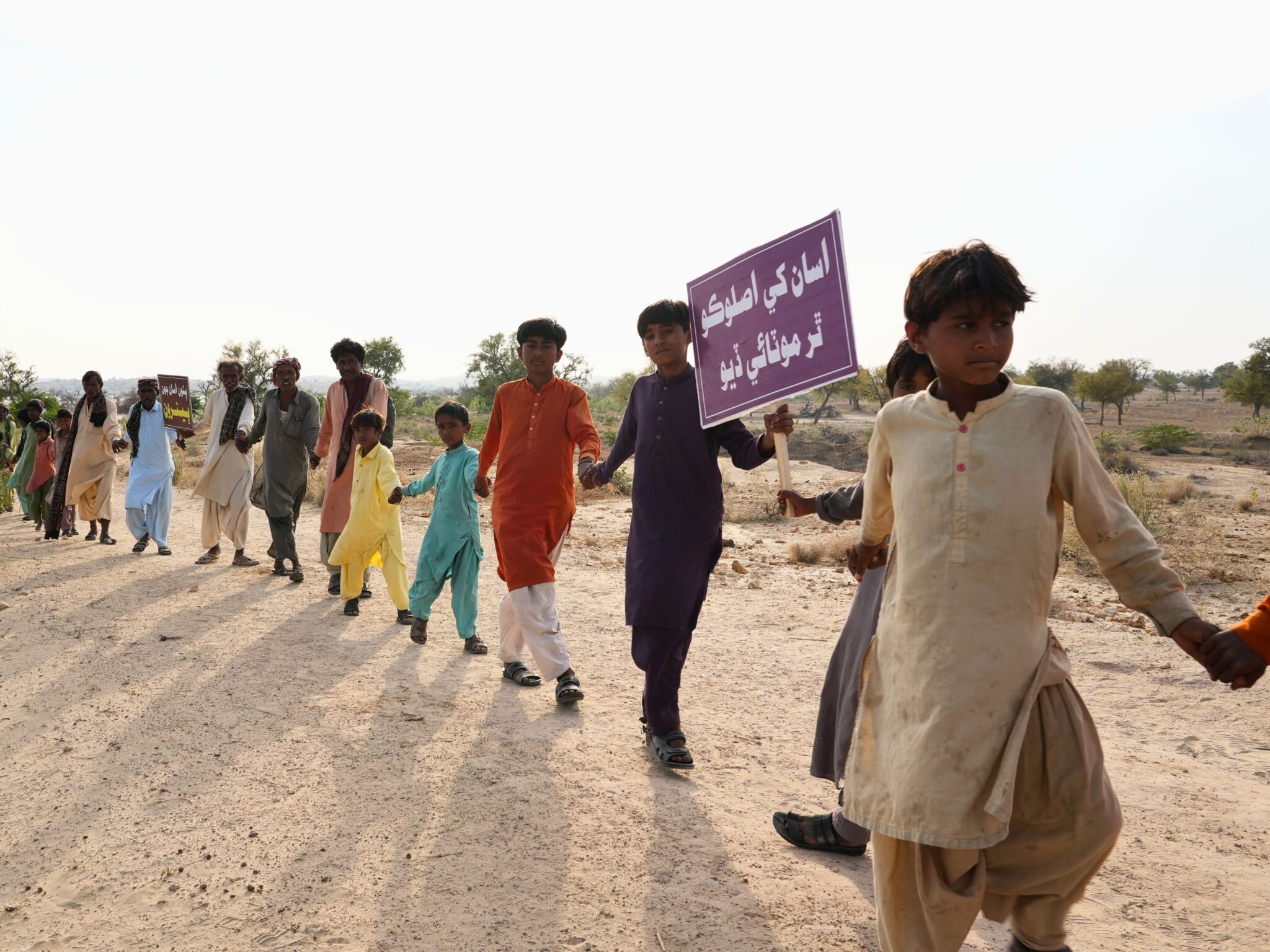
In Tharparkar, coal mining is not just about the extraction of an energy source. It is being portrayed as the harbinger of change and development. Promises of jobs, roads, schools and healthcare facilities accompany every plan to expand coal mines and coal-based power generation. This loud and persistent rhetoric has proved persuasive for many local residents.
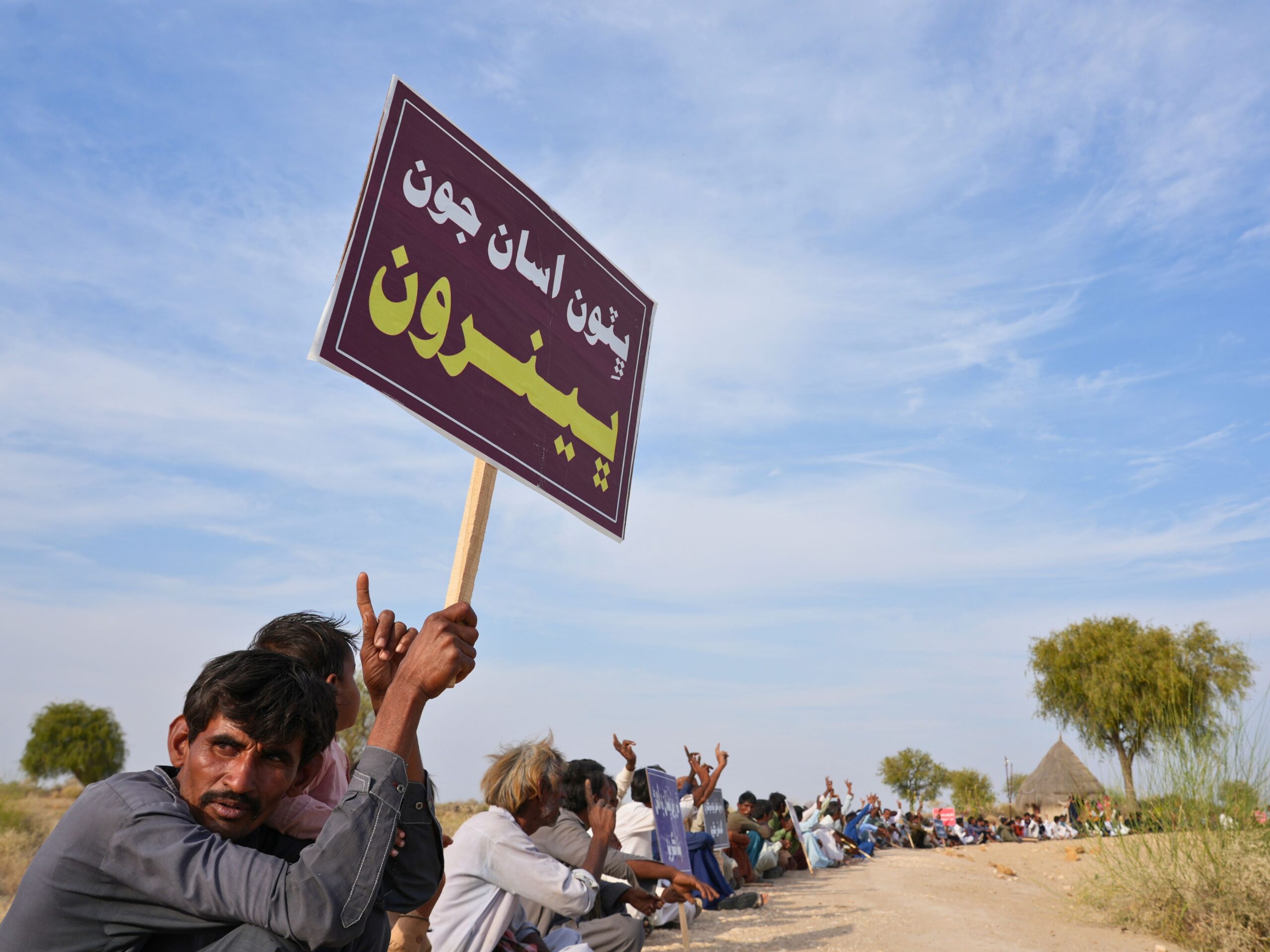
But even while the government’s representatives and corporate executives never tire of claiming that coal mining in Tharparkar is guaranteeing Pakistan’s energy security, voices of dissent have been increasing and growing louder. In 2018, for instance, some members of the audience walked out of a session at the Hyderabad Literature Festival because it was sponsored by a coal development company.
Subhan’s is another voice of dissent. A young man from Tharparkar’s village of Varwai, he speaks of fences, mining and toxic air with a mix of nostalgia and despair. “We have lost our land that gave us dignity,” he tells me – words that are simple but still carry the weight of a centuries-old wisdom. Yes, he laments, we have been given compensation for the loss of our homes and land but what is money when our entire way of life is slipping away?
Jhanjhi also writes in his poem about various types of losses being suffered by the people of Tharparkar as a result of coal mining. “Our wells are generations old,” but now they are either drying up or turning poisonous, he says. “Our huts, shelters, land will exist no longer,” he writes, and that is exactly what I have seen: homes being demolished, people being displaced, villages being turned to ghost settlements.
While in Tharparkar, I also heard about the 105-kilometer rail line being built to carry coal from Thar Coalfield Block II to other parts of Pakistan. More than being a means for coal transportation, the project is being seen locally just like any other coal-related scheme: causing displacement of villages, destruction of livelihood and erasure of memories. Jhanjhi summarises this loss without using any arcane symbolism: “Our green pastures, our fertile land will exist no longer”.
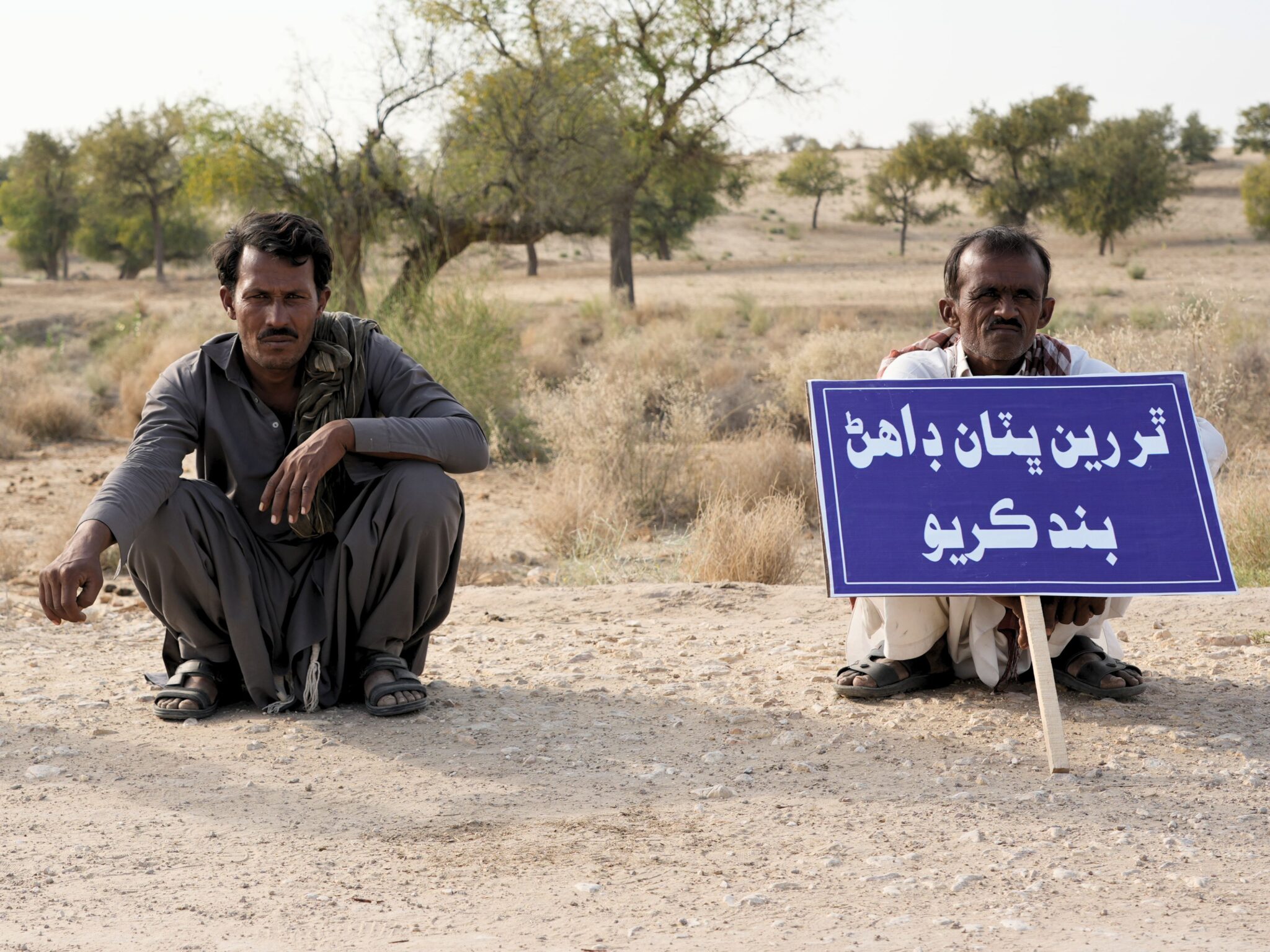
His poem also vividly captures the cultural loss that coal mining has wreaked upon Tharparkar. “Chang, borrindo, Chara will never be played again,” he mourns, speaking of the traditional music that fills the local air during festivals. The banter of young women, their bangles clinking as they speak of love and life, will disappearing too, he wails.
The environmental toll he talks about is just as severe. “Pastures between dunes of Jharkili will turn grey,” he warns and that is exactly what is happening in Tharparkar. Its natural beauty — rolling dunes, verdant pastures and precious trees — are giving way to housing colonies, guest houses asphalt roads. “Peacocks will be no more, and humans will be no more,” writes Jhanjhi towards the end of his poem. In this stark warning, he captures the ultimate cost of coal mining in the district.
The politics of coal mining in Tharparkar is deceptive. It creates the illusion of choice: compensation, relocation, employment. For many people living there, however, it signals a slow and irreversible demise. The coal reserves that lie beneath 45 per cent of their land are being sold off piece by piece and, with them, the very soul of this ancient region is being drained.
Radical rethinking is needed to avert this disaster. Development cannot – should not — mean destruction. Land is not a dead surface to be mined for coal. It is alive. “Our souls have been knitted with this land since centuries,” is how Jhanjhi describes the connection between people and land in Tharparkar. For them, coal mining is a betrayal of that bond.
The politics of rejecting coal is, thus, the politics of resisting the destruction of what is irreplaceable. It acknowledges and affirms that some things — land, water, culture, environment — are too important to be sacrificed for transitory economic gains. It stresses upon the fact that the people of Tharparkar deserve to define their own future, one that can help them leapfrog the travails of their present while still being rooted to their past. “We never ask for sustenance from anyone. We live on our own,” Jhanjhi proudly proclaims but this self-reliance is being heavily undermined by factors and forces beyond the control of local people. They must take this control back. They must have the right to live on their own terms.
The fight for Tharparkar is not just about preventing coal mining. It is about survival. It is about whether we, as a state and a society, are willing to sacrifice entire communities for economic development. It is about whether we can rethink development in a way that puts people and environment at its centre.
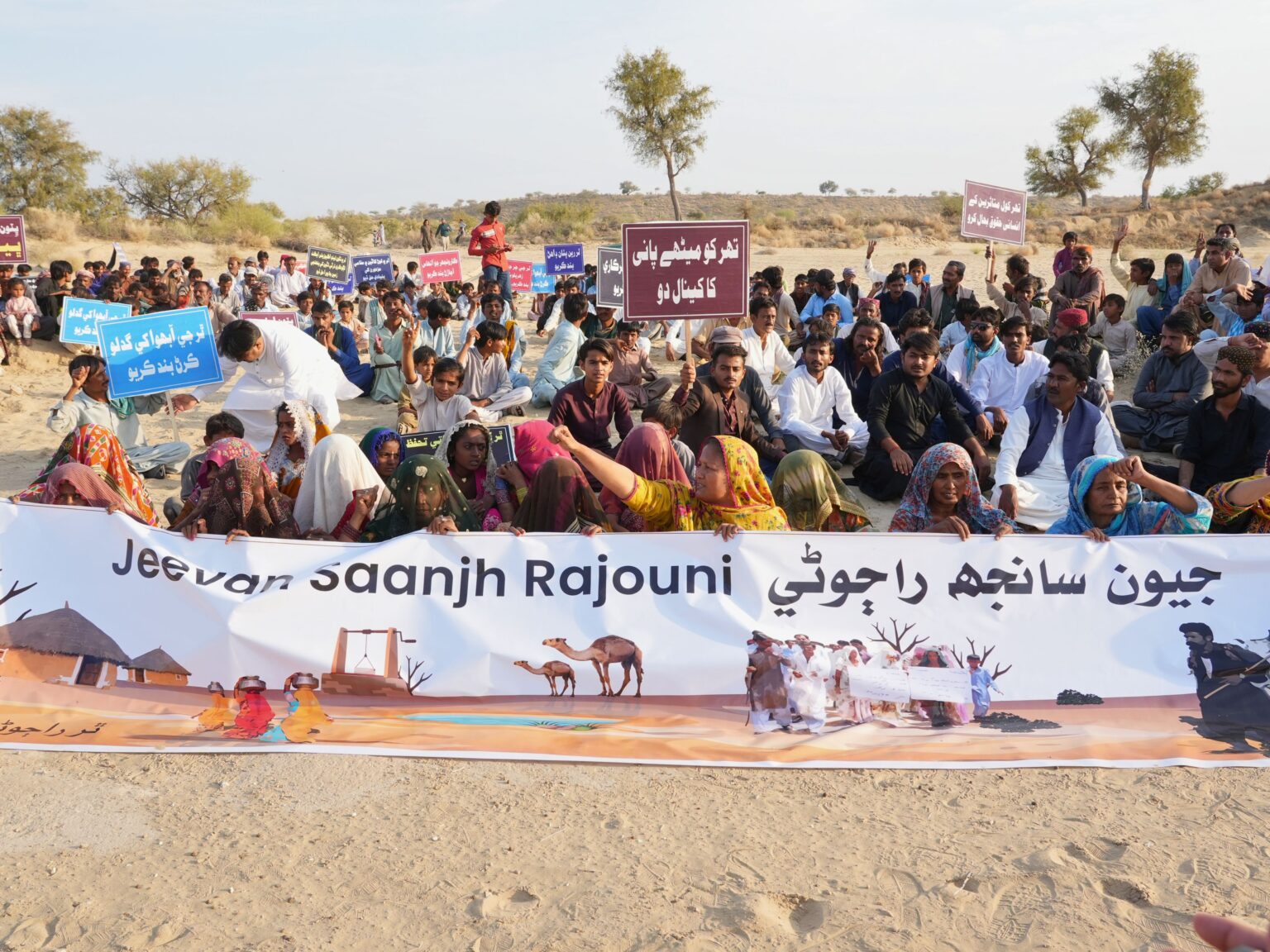
But, as I listened to the people of Tharparkar, it became clear to me that coal mining is not just a local issue. It is a global one. It is a question for the whole human civilization to ask itself: Should we prioritise profit over people and planet? Should we prefer development over human dignity? Should we continue to dig deeper into the earth, tearing it apart for the sake of fleeting financial gains, or should we protect what has sustained life since millennia – our land, our water, our natural environment?
The answer to the question “to mine or not to mine” is, therefore, clear: coal mining is causing a rupture in the very connection that binds human beings with the bounties and beauties of their planet — like a baby attached to its mother through the umbilical cord. Reversing this rupture is the only way for the survival of our civilization.